
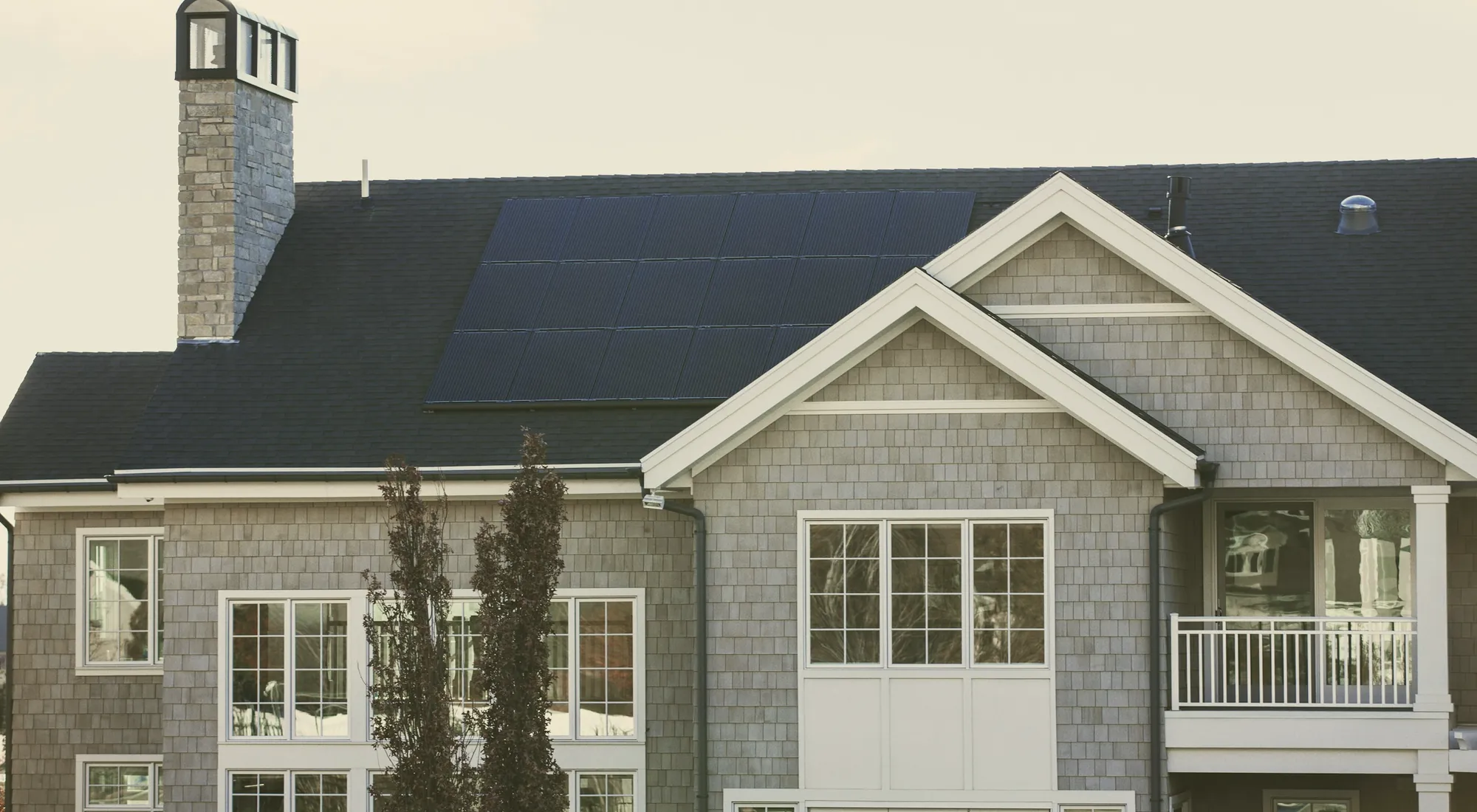
HOME SOLAR PANELS
Home solar that fits your roof and your budget
Aurica designs home solar with Axia by Qcells panels and gives you simple, upfront ways to pay, for homeowners across the U.S.
HOME SOLAR PANELS
What home solar actually does
Home solar panels turn sunlight into electricity you can use during the day. When your system produces more than you need, excess power may go back to the grid if your utility allows it—rules and credits vary by location.
You do not need to be an engineer to decide. Start with your ZIP code, a rough sense of your electric bill, and what you care about most: lower utility purchases, backup with a battery, or a payment path that fits your budget.
Searching for a solar installer near me or “home solar panels”? Aurica walks you through your options with full transparency, then partners handle design, permits, and install when you move ahead.
How solar works on your roof
Panels make DC power. An inverter converts it to AC for your home. Production peaks on sunny days and drops at night or in heavy shade. Monitoring shows what the system produces over time.
Pairing solar with solar battery backup lets you store some daytime energy for evening use or outages. Without a battery, most grid-tied systems shut off during a blackout for safety.
WHAT’S INCLUDED
Equipment and support you can expect
A typical residential project includes panels, racking, an inverter or microinverters, monitoring, and the electrical work to connect to your home. Exact gear depends on your design and local code.
AXIA BY QCELLS
Panel partner we work with
Aurica partners with Axia by Qcells for quality home solar panels. Qcells is a widely recognized module manufacturer; Axia is the pathway we use to bring that equipment to homeowners.
The “best” panel is the one that fits your roof, goals, and warranty package—not the loudest marketing claim. We compare layouts and equipment for your address instead of pushing a single SKU.
Curious about batteries in the same ecosystem? See Q.HOME CORE alongside Tesla Powerwall 3 options where available.
THE PROCESS
From first question to power on
Most homeowners want a realistic timeline. Exact dates depend on permitting, utility approval, roof condition, and crew schedules—often weeks to a few months from signed agreement to turn-on.
COST FACTORS
What drives the price of home solar
Pricing depends on system size (how many panels), roof complexity, equipment choices, electrical upgrades, and local labor and permitting. Many U.S. systems land in the tens of thousands of dollars before any incentives—your quote is the only number that matters for your home.
How you pay changes the cash-flow picture: cash ownership, or a solar PPA that focuses on paying for the power produced, with a 0% yearly rate or a 3.5% yearly increase. See payment options. The payment page has a side-by-side comparison.
MAINTENANCE & WARRANTIES
Keeping panels working
Modern panels are built for decades outdoors. Rain usually handles cleaning; occasional checks matter more after storms or if monitoring shows a drop. Inverter or battery service follows the product warranties in your agreements.
Warranties typically cover panel product/performance and workmanship for defined terms. Read the documents before you sign—marketing summaries are not a substitute.
FOR BUSINESSES
Commercial solar, too
Aurica also helps businesses and property owners go solar, from offices and retail spaces to warehouses, farms and multifamily buildings. We look at your roof or site and how you use energy, then walk you through your options with full transparency.
The ways to pay are the same: pay cash and own the system, or choose a solar PPA with a 0% or 3.5% yearly escalator. When you move ahead, our partners handle design, permits, installation and utility paperwork.
QUICK ANSWERS
Home solar FAQ
Short answers below. Your proposal and contracts control pricing and terms.
Do I need a new roof first?
Sometimes. Panels last decades, so a roof near the end of its life may need work before or during the project. We flag concerns early.
Will solar work on a cloudy day?
Yes, at reduced output. Systems are sized using local weather data, not only perfect sunshine.
Can I add a battery later?
Often yes, if the electrical design allows it. Planning backup up front can be simpler—see battery storage.
Is solar worth it without the 30% federal credit?
It depends on your rates, usage, roof, and payment path. A local proposal is the honest way to decide—savings are not guaranteed.
Looking for home solar panels near you?
Tell us your ZIP and we’ll check availability and next steps.